Project
Retail Price Optimization for CS Tay
Segmentation, elasticity modeling, and constrained optimization for retail pricing decisions.
Python Streamlit scikit-learn StatsModels Gurobi RFM analysis K-means clustering Price elasticity modeling
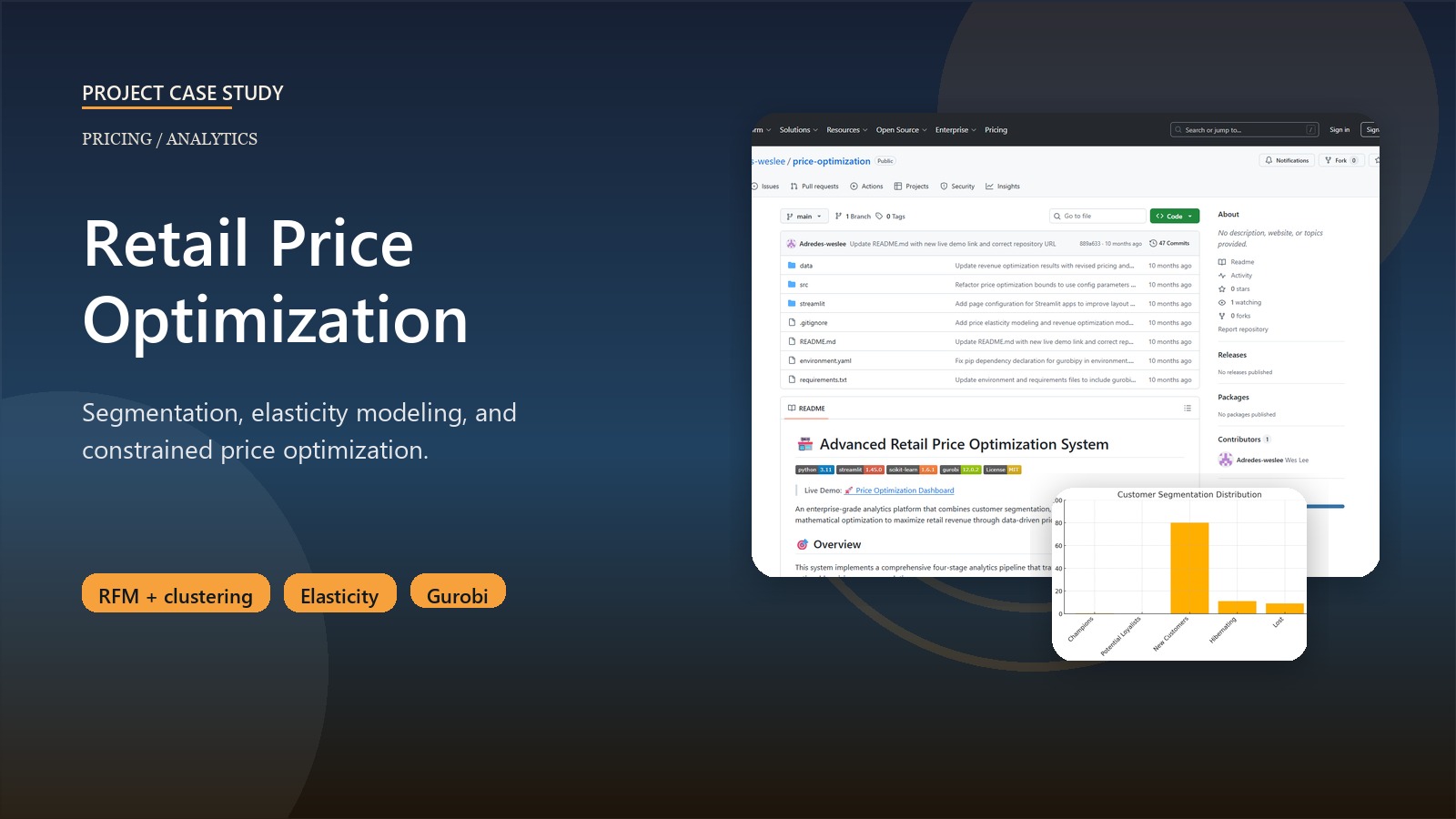
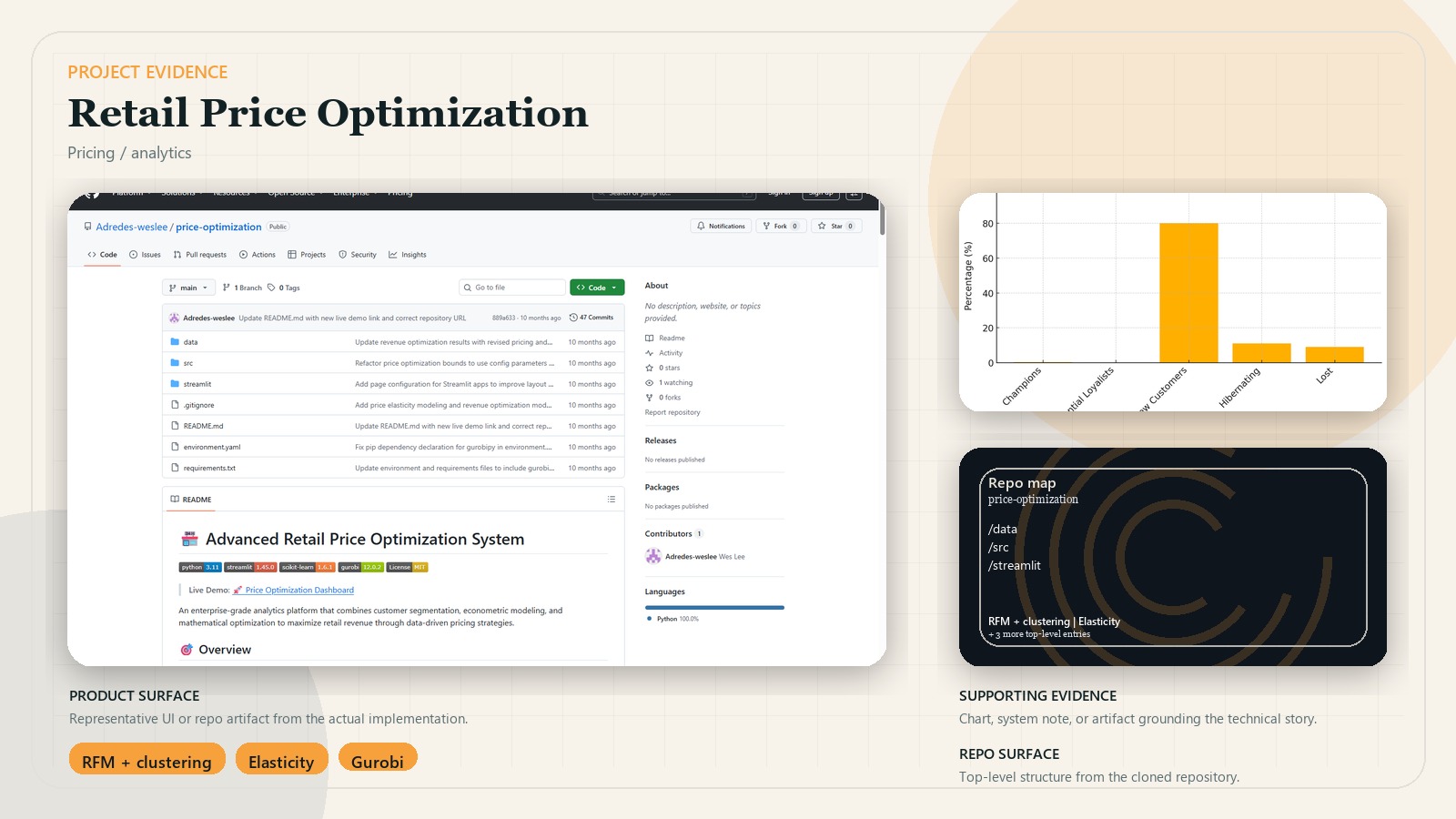
Business context
CS Tay needed a pricing strategy that went beyond cost-plus rules. The problem was not just finding better prices. It was connecting customer behavior, price sensitivity, and commercial guardrails into one decision flow that a business team could actually use.
Outcome
- Built a four-stage analytics pipeline from transaction cleanup to pricing recommendations.
- Combined RFM segmentation, elasticity modeling, and Gurobi optimization inside one workflow.
- Modeled a revenue-upside scenario of roughly SGD 4M annually from segment-specific pricing moves.
- Shipped the work as an interactive demo instead of leaving it as a slide deck or notebook.
Key decisions
- Separated segmentation, elasticity estimation, and optimization so each layer could be explained and validated on its own.
- Used RFM plus clustering to capture customer heterogeneity before pricing.
- Modeled own-price and cross-price elasticity before optimization, so recommendations reflected demand response instead of static margin logic.
- Added practical constraints like price bounds and category movement limits to keep outputs realistic.
System design
Transaction data is cleaned and aggregated, passed into customer segmentation, then into econometric price modeling. The resulting elasticity signals feed a constrained optimization layer that recommends price moves and exposes scenario analysis through the dashboard.
Stack
- Python, pandas, scikit-learn, StatsModels, and Gurobi
- Streamlit for the decision-support interface
- RFM analysis, clustering, elasticity modeling, and constrained optimization